
Have you ever found yourself wide awake at 2 am, not because the baby is crying, but because your mind simply won't stop racing with "what if" scenarios? It's an exhausting place to be, especially when you're also navigating the physical tender spots of birth recovery and extreme sleep deprivation. Many new mums find themselves wondering if they're just experiencing the common Postpartum Anxiety (PPA) vs. Baby Blues, or if something more intense is taking hold of their fourth trimester.
It's completely understandable to feel overwhelmed by the hormonal rollercoaster and the sheer weight of a new life in your arms. You might even worry that you're being judged, but please know that your feelings are a valid part of many postpartum journeys and don't define your worth as a parent. We promise to help you distinguish between these two experiences while offering practical, gentle ways to support your mental and physical recovery. We'll break down the key symptoms and provide a clear checklist so you can identify exactly what you're feeling and find the right steps to start feeling like yourself again.
Key Takeaways
- Recognise the natural hormonal shifts that affect up to 80% of new mums so you can feel more prepared for the emotional highs and lows of the fourth trimester.
- Discover the specific signs of Postpartum Anxiety (PPA) vs. Baby Blues and learn when persistent worry might be more than just standard new parent jitters.
- Understand how prioritising physical comfort and effective pain management during birth recovery can help lower stress hormones and support your overall mood.
- Learn how to transition from simply accepting help to actively organising a support system that protects your sleep and mental energy.
- Access a clear checklist to help you identify your feelings and gain the confidence to seek professional support if you need it.
The Fourth Trimester Reality: Understanding the Postpartum Baby Blues
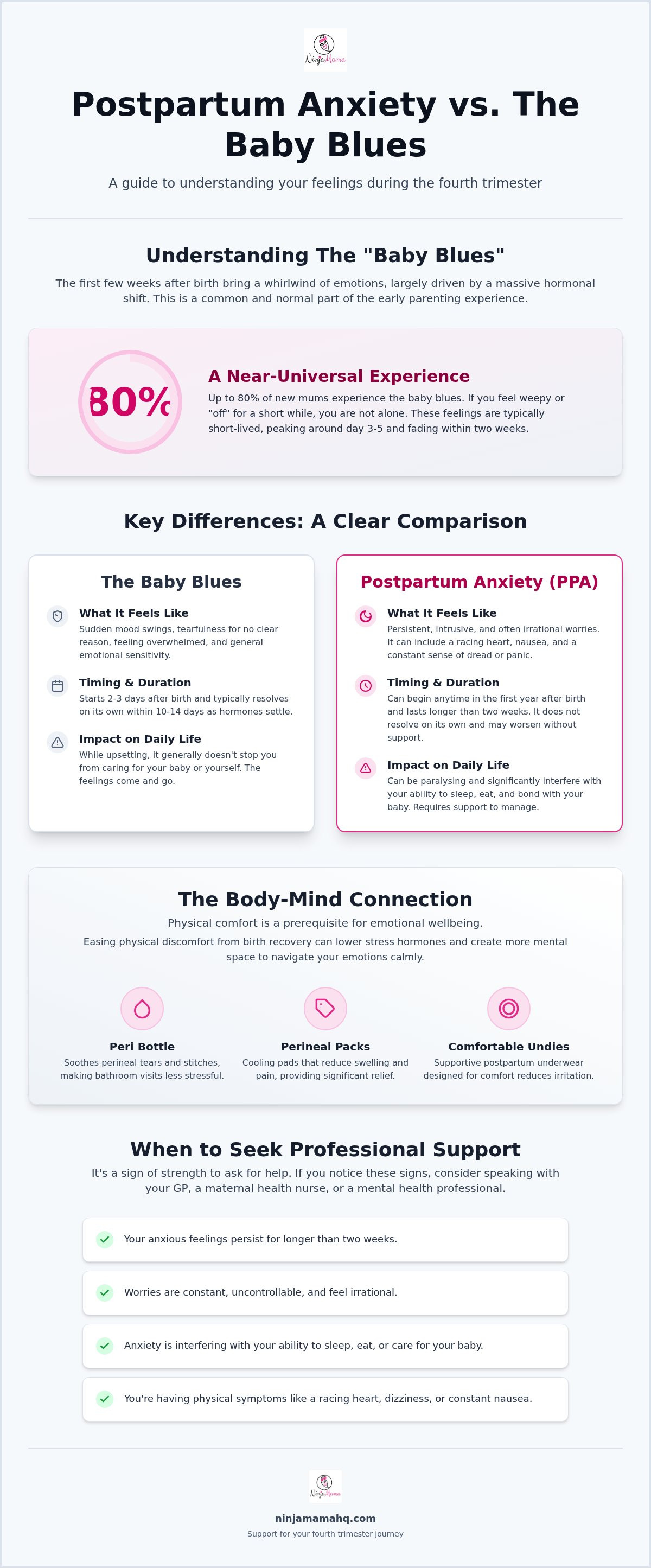
The first few days after bringing your bub home are a whirlwind of tiny fingernails and overwhelming love, but they're often accompanied by a sudden, unexpected wave of tearfulness. If you find yourself crying because the toast is too crunchy or feeling a bit "off" despite everything being okay, you aren't alone. In fact, up to 80% of new mums experience what we call the baby blues. It's a near-universal part of the early parenting experience, largely driven by the monumental hormonal shift that occurs the moment your placenta leaves your body.
This transient state, often referred to as Postpartum blues, is a normal response to the biological "crash" of oestrogen and progesterone levels. While these feelings are intense, they are usually short-lived. To better understand how these early feelings differ from more persistent conditions, watch this helpful video:
While the blues are common, it's helpful to start thinking about the distinction between Postpartum Anxiety (PPA) vs. Baby Blues early on. The blues usually peak around day three to five and start to lift within a week or two as your body finds its new equilibrium. During this time, you might feel like your emotions are on a hair-trigger, but this is your body's way of processing a massive life event.
Common Symptoms of the Baby Blues
The baby blues tend to show up as a mix of emotional sensitivity and physical exhaustion. You might experience sudden mood swings where you're "happy-crying" over a cute sleepsuit one minute and "sad-crying" for no discernible reason the next. Many mums report feeling completely overwhelmed by simple tasks, like choosing which nappy to use or what to have for lunch. It's also incredibly common to have difficulty sleeping even when the bub is finally settled, as your mind finds it hard to switch off from the day's events.
Why We Call it the "Fourth Trimester"
This 12-week period is more than just a recovery phase; it's a profound transition known as matrescence. Just like adolescence, your brain and body are undergoing a massive shift as you grow into your new identity as a mother. Lowering your expectations during this window is vital for your wellbeing. We often say that physical healing is a prerequisite for emotional stability. When you aren't distracted by the sting of a tear or the discomfort of a C-section incision, you have more mental capacity to process these new emotions. Using simple tools like a peri bottle or cooling pads can reduce daily stress, making it easier to navigate the Postpartum Anxiety (PPA) vs. Baby Blues spectrum with a bit more calm and confidence.
Decoding Postpartum Anxiety (PPA): More Than Just New Mum Nerves
If the baby blues are a passing storm, Postpartum Anxiety (PPA) feels like a permanent change in the climate. It is far more than just "new mum nerves" or the typical jitters that come with a first-time bub. PPA is a clinical condition characterised by persistent, intrusive, and often irrational worries that interfere with your ability to function. While we often talk about the Postpartum Anxiety (PPA) vs. Baby Blues distinction in terms of timing, the quality of the worry is the real giveaway.
Interestingly, research suggests that anxiety is actually more common than Postpartum depression, yet it receives significantly less attention in our coffee-group chats. It's vital to distinguish between a healthy "protective instinct" and "paralysing anxiety." Wanting to keep your baby safe is natural; however, when that desire turns into a racing heart, sweaty palms, or constant nausea, your nervous system is stuck in a fight-or-flight loop.
This physical toll is deeply exhausting. You aren't just "worried"; you're physically reacting to perceived threats that don't exist. To help ground yourself during these high-tension moments, some women find that incorporating a labour and postpartum support oil roller into a deep-breathing routine provides a small, sensory moment of calm in a busy day.
The Red Flags of Postpartum Anxiety
Recognising PPA often requires looking at your daily habits with a compassionate eye. Are you stuck in scary "what if" loops that you simply cannot switch off? These intrusive thoughts are a major red flag. Other signs include checking the baby's breathing so frequently that you never actually sleep yourself, or avoiding activities like driving with the bub because the fear of "something happening" is too intense. When these fears start dictating your schedule, it's time to reach out for a chat with a professional.
PPA vs. Postpartum Depression (PPD)
New mums often ask how to tell the two apart. If PPD feels like a heavy, dark cloud that makes it hard to get out of bed, PPA feels like a motor that won't stop running. You might feel "wired but tired," unable to settle even when you finally have the chance to rest. These conditions often overlap, and many women experience symptoms of both simultaneously. PPA is a clinical condition that requires professional support and understanding, and it is never a sign of failure or a reflection of your ability as a mother.
PPA vs. Baby Blues: Key Differences and When to Seek Help
Understanding the nuances of Postpartum Anxiety (PPA) vs. Baby Blues is about more than just checking boxes; it is about reclaiming your peace of mind. While both experiences involve emotional shifts, the baby blues are generally a manageable, transient "fog" that lifts as your hormones settle. PPA, however, is often debilitating. It doesn't just make you feel weepy; it can make you feel like you are constantly on high alert, unable to enjoy your new bub or even perform basic self-care because the "what if" thoughts are too loud.
The intensity of these feelings is a major indicator of which path you are on. With the blues, you might cry while watching a commercial but still feel like yourself between the waves. With PPA, the anxiety can feel like a physical weight that prevents you from bonding or resting. Research into the Symptoms of baby blues vs. postpartum depression and anxiety shows that while the blues are nearly universal, persistent anxiety that lasts beyond the first fortnight requires a different level of care. You should consider calling your midwife, GP, or child health nurse if you notice any of the following:
- Your anxiety prevents you from sleeping even when the baby is asleep.
- You feel a sense of dread about being alone with your baby.
- Physical symptoms like heart palpitations or shortness of breath occur daily.
- The intrusive thoughts feel "stuck" and you cannot distract yourself from them.
- You are avoiding necessary tasks, like bathing the baby, due to intense fear.
The Two-Week Rule
In the clinical world, the 14-day mark is a significant turning point. Most cases of the baby blues resolve within ten to twelve days. If you reach day 14 and your symptoms are staying the same or getting worse, it is time to seek professional advice. However, please trust your gut. If you feel "off" or unsafe on day four, you don't need to wait for a calendar date to ask for help. Talking to your partner can be hard, but try a simple script: "I’m feeling more than just tired; my mind feels like it’s racing and I need some help to slow it down."
Seeking Professional Support in Australia
We are lucky in Australia to have a robust support system for new parents. Your local Child and Family Health Nurse is an excellent first point of contact; they see hundreds of mums and can offer a non-judgemental ear. For more structured support, your GP can help you organise a Mental Health Care Plan, which provides Medicare rebates for psychological sessions. During your six-week check-up, you will likely complete the Edinburgh Postnatal Depression Scale (EPDS). Be as honest as possible during this screening. It isn't a test you can "fail," but a tool to ensure you get the support you deserve during this massive transition. For more information on the current landscape of maternal health, you can read about the state of postpartum 2026.
The Physical-Mental Link: How Recovery Comfort Impacts Your Mood
While many discussions surrounding Postpartum Anxiety (PPA) vs. Baby Blues focus on the emotional side of motherhood, we cannot ignore the physical reality of birth recovery. Your body has just performed a monumental feat. Whether you are healing from a vaginal birth or a C-section, chronic pain is a significant physiological stressor. When your body is in pain, it stays in a state of high alert, pumping out cortisol, the stress hormone. This constant chemical "noise" makes it incredibly difficult to distinguish between standard hormonal shifts and a more persistent anxiety disorder.
One of the most overlooked contributors to early postpartum stress is "bathroom anxiety." Dreading the sting of your first few trips to the toilet adds a heavy layer of mental load to an already exhausting time. This is why we view physical recovery tools not as luxuries, but as essential mental health support. By removing the fear of pain, you're giving your mind the space it needs to settle. For a closer look at how simple hygiene tools can transform your recovery experience, read our peri bottle pillar article.
Soothing the Body to Quiet the Mind
When you take the "sting" out of recovery, your nervous system can finally start to regulate. Using a Ninja Mama Peri Bottle turns a stressful bathroom visit into a manageable, even soothing, process. It is about reclaiming a sense of control over your body. Similarly, a 10-minute soak with a Sitz Bath Soak provides a much-needed sensory break. It is a structured moment of quiet time that helps lower your heart rate and quieten racing thoughts. Reducing sensory overload is another key; staying dry and comfortable in postpartum underwear means one less thing to worry about when you're already juggling a newborn's needs.
Preparation as an Anxiety Reducer
Decision fatigue is a massive trigger for both the blues and PPA. Having a postpartum self care kit prepared before you even go into labour is a powerful way to reduce the mental load. When you have your essentials organised, you don't have to scramble or ask for help with every minor need. This sense of preparedness acts as a mental safety net; feeling ready for the physical recovery helps you feel more capable of handling the emotional demands of a new baby. Physical relief allows for better oxytocin flow, which is essential for bonding and feeling that warm connection with your bub. You deserve to feel comfortable while you heal. Explore our postpartum recovery bundles to find everything you need in one place.
Creating Your Postpartum Support System: Practical Steps for Aussie Mums
Building a village isn't just a nice idea; it's a survival strategy for your mental health. While understanding the signs of Postpartum Anxiety (PPA) vs. Baby Blues is vital, having a plan to manage your daily life is what truly helps you heal. Many of us fall into the trap of saying "I'm fine" when friends offer help, but the fourth trimester is the time to trade politeness for practical support. Instead of just "accepting" help, try organising it. Ask a friend to coordinate a meal train, or tell your sister that you need her to put a load of laundry on rather than just holding the bub.
Sleep is another non-negotiable pillar of recovery. We've all heard the "sleep when the baby sleeps" advice, but for a mum dealing with high levels of worry, this can feel like an impossible task. Your brain might be too wired to rest even when the house is quiet. Focus on "protected rest" instead. This means having your partner or a family member take the bub for a two-hour window where you are physically separated from the baby's noises. This allows your nervous system to actually drop into a deeper state of rest, which is essential for regulating those haywire hormones.
Protecting your mental space also means setting firm boundaries with visitors. You aren't a host; you are a recovering patient. If having people over feels like a performance you can't manage, it's okay to say no. A simple sign on the door or a group text explaining that you're "cocooning" for a few weeks can save you a world of sensory overload. Asking for help isn't a sign that you're failing; it is a sign of incredible strength and self-awareness.
Essential Australian Mental Health Resources
If you feel like your anxiety is becoming unmanageable, please reach out to these incredible Australian organisations. They are experts in the specific challenges of the fourth trimester. Please remember that while these resources are helpful, you should always consult a registered medical professional for personalised mental health advice.
- PANDA (Perinatal Anxiety & Depression Australia): Call their National Helpline on 1300 726 306 for specialist support and a non-judgemental ear.
- Gidget Foundation Australia: They provide free psychological support for expectant and new parents through their network of centres and telehealth services.
- Beyond Blue: Offers 24/7 support via phone or webchat for immediate anxiety concerns that just won't quit.
The Ninja Mama Approach to the Fourth Trimester
At Ninja Mama, we believe in a "Mums first" philosophy. We know that a healthy, supported mum is the foundation of a healthy bub. Our mission is to take the guesswork out of your recovery so you can focus on what matters most: your wellbeing and your new little one. We invite you to join our community, share your story, and remember that you never have to navigate this journey alone. To make your recovery as smooth as possible, explore our curated Postpartum Recovery Bundles and give yourself the gift of comfort and prepared calm.
Embracing a Calmer Fourth Trimester
Navigating those first few weeks of motherhood is a monumental journey that deserves both patience and practical support. By understanding the nuances of Postpartum Anxiety (PPA) vs. Baby Blues, you've already taken a vital step toward protecting your mental wellbeing. Remember that the "blues" are a common, transient part of the hormonal shift, while PPA is a clinical condition that thrives on physical discomfort and exhaustion. Prioritising your physical recovery isn't a luxury; it's a foundation for emotional stability.
As an Australian-owned brand loved by thousands of mums, Ninja Mama is here to provide empathetic support for your entire fourth trimester journey. Our evidence-aware recovery solutions are designed to soothe your body whether you've had a vaginal or C-section birth, allowing you to focus more on your bub and less on the sting of healing. To take the guesswork out of your recovery and reduce decision fatigue, we invite you to Shop Ninja Mama Postpartum Recovery Kits. You are doing an incredible job, mama, and with the right tools and support, you can find your way back to a sense of prepared calm.
Frequently Asked Questions
How can I tell if my postpartum anxiety is getting worse?
You can tell your anxiety is escalating if the "what if" thoughts start to dominate every hour of your day or prevent you from performing basic self-care. While the Postpartum Anxiety (PPA) vs. Baby Blues distinction often rests on timing, worsening PPA often manifests as physical panic, such as a racing heart, sweaty palms, or shortness of breath. If you feel "wired but tired" and simply cannot settle even when your bub is sleeping, it's time to speak with your GP or midwife.
Can lack of sleep cause postpartum anxiety symptoms?
Yes, extreme sleep deprivation is a major trigger for anxiety symptoms because it keeps your nervous system in a state of high alert. When you don't get enough rest, your body produces more cortisol, which can lead to racing thoughts, brain fog, and heightened irritability. While sleep is hard to come by with a newborn, prioritising even small windows of protected rest can help lower your stress levels and make your emotions feel much more manageable during the fourth trimester.
Is it normal to feel angry or irritable with the baby blues?
Feeling irritable or even experiencing what some mums call "postpartum rage" is a very common part of the baby blues. These sudden flashes of anger are often a result of the massive hormonal crash following birth and the sheer exhaustion of the first week. While it can feel scary or make you feel like an "unfit" mother, it is usually a transient phase that settles as your body finds its new equilibrium and you get more support.
Do I need medication for postpartum anxiety, or will it go away on its own?
Whether you need medication depends entirely on the severity of your symptoms and should be discussed with a medical professional. While the baby blues typically resolve on their own within ten to fourteen days, PPA often requires active support such as cognitive behavioural therapy or medication. Please remember that while this information is helpful, you should always consult a registered medical professional for personalised mental health advice to ensure you find the right path for your recovery.
How can my partner help me if I have PPA?
Your partner can help best by taking over practical household tasks and ensuring you get "protected" sleep windows where you are physically separated from the baby's noises. By managing the laundry, meals, and nappy changes, they reduce your mental load and decision fatigue. Encouraging you to talk about your fears without judgement and helping you track the Postpartum Anxiety (PPA) vs. Baby Blues symptoms can also provide much-needed emotional safety and clarity during this transition.
Are there natural ways to support my mood during the fourth trimester?
Supporting your mood naturally often starts with prioritising your physical comfort and reducing daily pain. Many women find that using soothing tools like perineal ice packs or a warm sitz bath helps lower their overall stress by calming the nervous system. Additionally, staying hydrated, eating nourishing meals, and using gentle sensory supports like a clary sage essential oil dropper can create a more calming environment. These small acts of self-care help signal to your brain that you are safe and cared for.
What is the difference between PPA and Postpartum Obsessive-Compulsive Disorder (OCD)?
The main difference lies in the nature of the thoughts and the presence of specific repetitive behaviours or "compulsions." While PPA involves general, persistent worry about the baby's safety, Postpartum OCD is characterised by very specific, often disturbing intrusive thoughts. These are usually followed by compulsive behaviours, such as checking the baby's breathing hundreds of times a night or constantly washing bottles, in an attempt to neutralise the fear. Both conditions are treatable and require professional support.
Does breastfeeding affect postpartum anxiety levels?
Breastfeeding can have a complex impact on your anxiety levels due to the release of oxytocin, which often promotes bonding and relaxation. However, if you are experiencing pain, supply worries, or feel immense pressure to succeed, it can actually increase your stress. Using comfortable essentials like bamboo nursing pads and staying hydrated with lactation tea can help make the experience more soothing. It's important to remember that your mental health is the priority, regardless of how you choose to feed your bub.

Article by
Louise Beever
Louise Beever is the founder of Ninja Mama, an Australian postpartum recovery brand focused on creating premium, practical recovery essentials for new mothers. Since launching Ninja Mama in 2018, Louise has worked closely with thousands of postpartum women and healthcare retailers to better understand the realities of recovery after birth. Her work focuses on postpartum preparation, recovery support, and improving awareness around the fourth trimester.
Remember Mamas
The information provided in this article is intended for general educational and informational purposes only and should not be considered medical advice. Always seek guidance from your doctor, midwife, lactation consultant, or qualified healthcare professional regarding your individual circumstances, pregnancy, birth, or postpartum recovery.